When you open a small store-bought jar for the first time, you quickly notice that the texture and taste are identical from one batch to another. Preparing homemade baby food changes the game: you control the fruits, the cooking, and the texture. With the recommended food diversification between 4 and 6 months according to the French Pediatric Society, purees often serve as the first introduction to fruits.
Pesticide residues in purees: why the choice of fruits matters
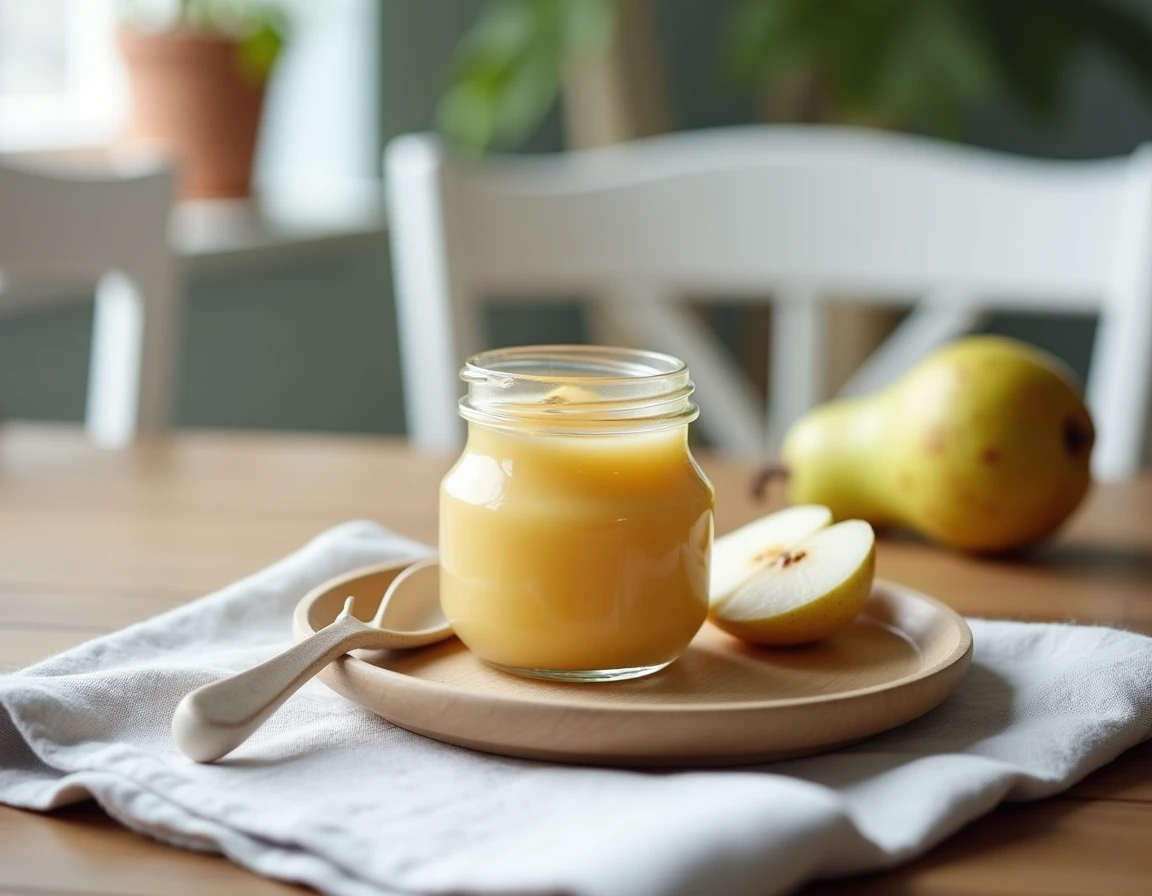
Recent inspections by the DGCCRF on industrial jars and purees have revealed sometimes high levels of pesticide residues, particularly in apple and pear products. For homemade preparations intended for babies, choosing organic fruits or those from controlled residue sources reduces this exposure.
You can also systematically peel the fruits, even organic ones. The skin concentrates most of the residues. For apples, removing the core and skin before cooking takes less than a minute per fruit.
In practice, organic apples, pears, and bananas are easily found in season at reasonable prices. For more delicate fruits (peach, apricot), availability varies by region, but organic frozen options are a reliable alternative year-round.
Apple-pear puree for baby: the basic recipe to master
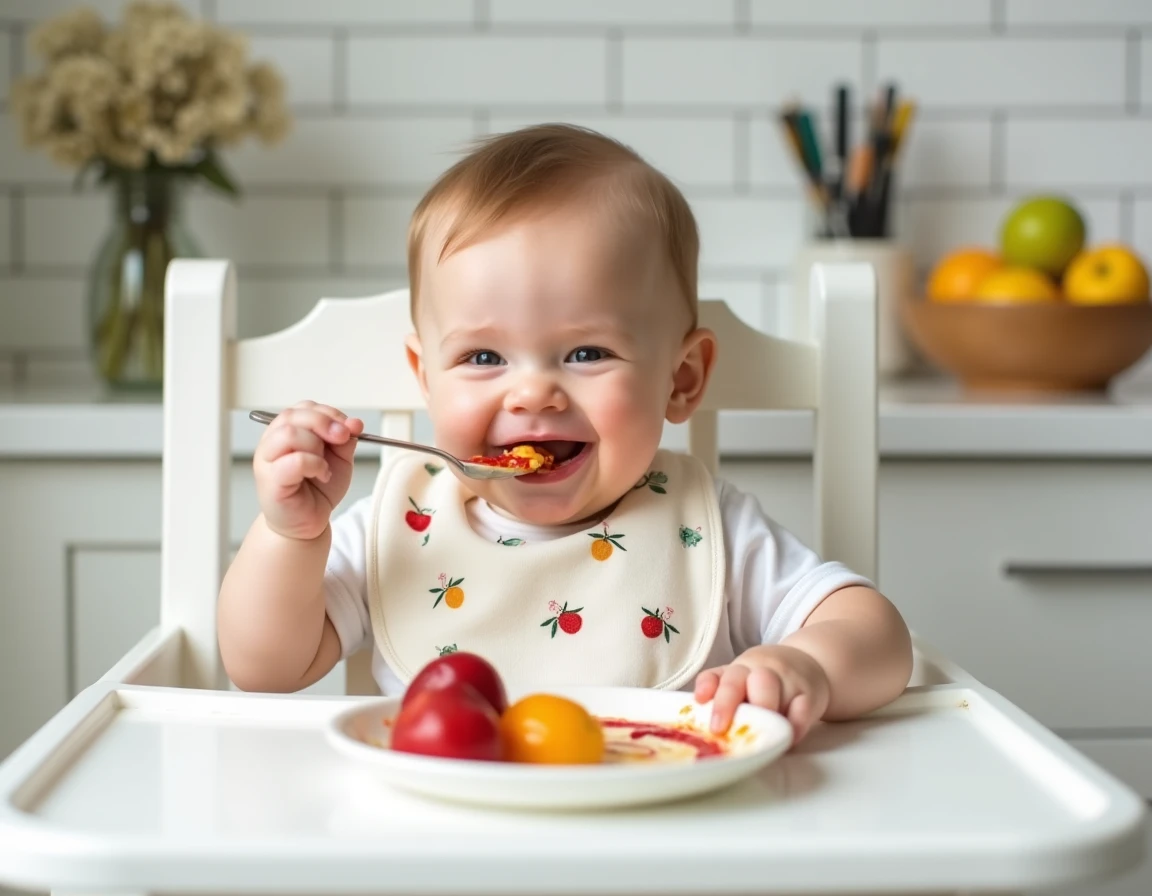
Before experimenting with various combinations, it’s better to lock in a simple recipe. The apple-pear combination works from the start of diversification because these two fruits are sweet, digestible, and easily available.
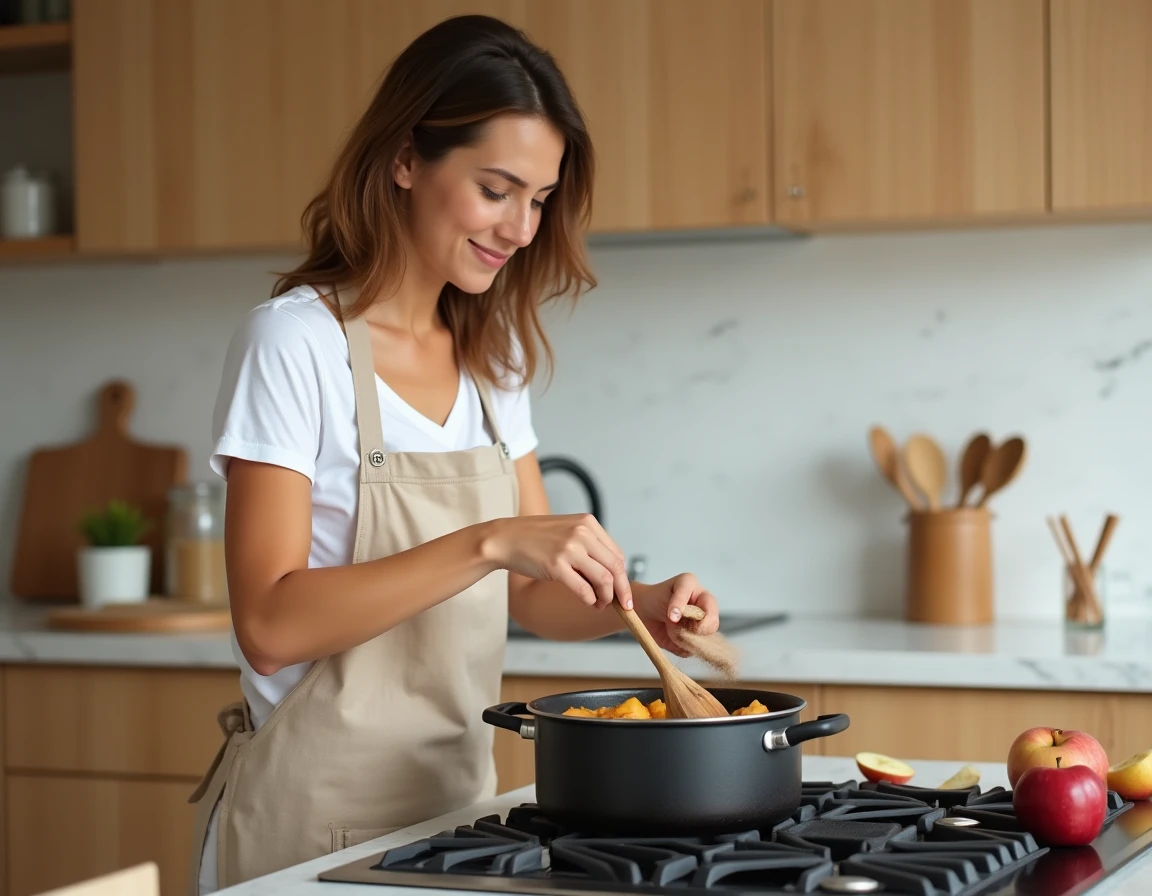
Peel one apple and one pear, remove the seeds and core, and cut into small pieces. Steam cook for about ten minutes, until a knife passes through the flesh without resistance. Blend until smooth for a baby aged 4 to 6 months. This result serves as the base for most other recipes.
To explore baby puree recipes that start from this same apple-pear base, you can vary the combinations according to the season and the child’s age.
Seasonal purees for baby: fruit combinations month by month
Offering a single fruit at a time during the first few days allows you to identify any potential allergic reactions. Once this phase is over, mixtures open up a true field of taste discovery.
Autumn and winter: apple, pear, quince, banana
The apple-quince puree provides a slight astringency that many babies accept well when the quince is kept to a minimum (one quarter of the mixture). The apple-banana, naturally sweeter, is almost always a hit. You can also try pear-vanilla: half a scraped pod in the pot is enough to flavor without adding sugar.
Spring and summer: apricot, peach, strawberry, mango
Apricot pairs well with apple to temper its acidity. Steamed and blended peach creates a silky puree that works on its own. Strawberry is generally introduced after 6 months, in small amounts mixed with banana to soften the taste.
- Apple-apricot: cut the apricots in half, remove the pit, steam with the apple. Blend together.
- Pear-mango: use ripe mango (fresh or frozen), steam the pear and blend the two fruits, both raw and cooked.
- Banana-strawberry: mash the raw banana with a fork, add the cooked and blended strawberries. No need to cook the banana.
- Apple-peach-vanilla: same technique as the apple-pear, with half a vanilla pod in the cooking water.
Puree textures according to the baby’s age
ANSES recommends not staying too long on perfectly smooth textures. Gradually introducing chunks supports the development of chewing. In practice, there are three stages.
Between 4 and 6 months, blend finely. No chunks should remain. The puree should flow slowly from the spoon.
Around 7 to 8 months, mash with a fork instead of blending. The texture becomes chunky, with small melting pieces. Pear and banana work particularly well for this exercise because their flesh is tender.
From 9 to 10 months, you can leave visible pieces. A piece of well-cooked soft peach, a melting slice of pear: the baby learns to manage the texture in their mouth.
Storage of homemade purees for baby
Homemade puree contains no preservatives or added sugar, which shortens its shelf life compared to industrial versions. In the refrigerator, do not exceed 48 hours.
The freezer extends storage to about three months. The most practical method remains the silicone ice cube tray: each cube corresponds to a portion, you pop them out and store them in a labeled freezer bag with the date and fruit.
- Refrigerator: glass jar with airtight lid, consume within 48 hours.
- Freezer: silicone ice cube tray for portioning, then freezer bag. Duration: three months maximum.
- Thawing: in the refrigerator the night before, or in a water bath. Never refreeze a puree that has already been thawed.
Homemade puree without added sugar: what health authorities say
ANSES and EFSA have strengthened their recommendations on limiting free sugar for children under two years old. Honey is prohibited before one year (risk of botulism). Table sugar and syrups have no place in baby puree.
In practice, apple and banana provide enough natural sugar to make the mixture pleasant. If a fruit is acidic (blackcurrant, redcurrant), pair it with a sweeter fruit instead of adding sugar. Vanilla, cinnamon in very small amounts after 8 months, or a zest of organic citrus can vary the flavors without resorting to sweeteners.
Homemade purees made with seasonal fruits, without sugar or additives, offer a clear advantage over industrial versions in terms of taste and ingredient control. By starting with apple-pear and gradually expanding, you build the baby’s palate fruit by fruit, season by season.