Choosing a wedding outfit after 60 poses a dilemma that fashion magazines rarely address in all its complexity. The dress or ensemble must last for an entire day, sometimes ten hours straight, between the ceremony, cocktail in the sun, extended seated meal, and dance floor. The topic goes beyond just the question of style.
Thermal comfort and mobility: the criteria that the photo doesn’t show

Most guides dedicated to wedding attire for women over 60 focus on cuts and colors. They overlook a decisive factor: managing body heat over a long day. An outdoor summer wedding exposes guests to several hours of direct sunlight during the cocktail, followed by the air conditioning of a reception hall.
Shiny synthetic materials, common in low-cost ceremony dresses, trap sweat and cause quick discomfort. Viscose, quality jersey, and natural silk regulate temperature better and allow for movement without clinging to the stomach or hips after an hour of sitting.
Mobility is another blind spot. An elegant sheath dress in photos can make climbing stairs or getting into a car complicated. For a guest wishing to participate in the first dance or simply move between tables, finding an elegant wedding outfit for women over 60 means checking the actual ease of the garment, not just its drape in front of a mirror.
Modular ceremony dresses: a trend to closely examine
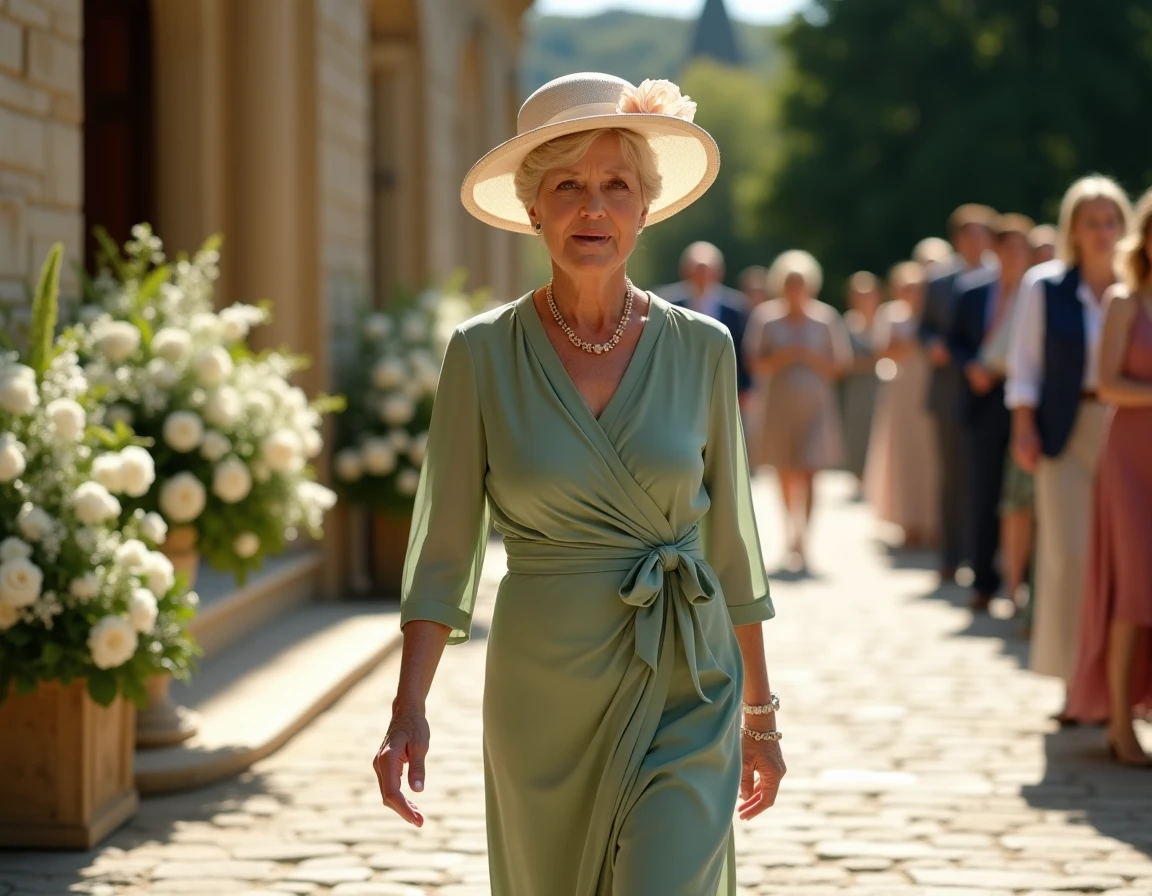
Since 2023-2024, modular ceremony dresses have multiplied in the market. The principle: removable elements (belts, adjustable straps, detachable sleeves, repositionable drapes) that allow the outfit to be adapted throughout the day.
This format meets a concrete need for women over 60. Adjusting the level of coverage between the ceremony and the evening avoids the need to bring a second outfit. Sleeves that can be removed for dancing, an integrated shawl that covers the shoulders at the church and then folds into a belt: these options are now available at several retailers.
What e-commerce filters don’t always tell you
Online shops increasingly offer filters by body shape (“round belly,” “arms to cover,” “fragile back”). This evolution reflects a recent consideration of the concerns of women over 55-60 in digital shopping journeys. However, a morphological filter does not replace a real fitting. The modular cut that appears fluid on a 1.75 m model can produce a very different effect depending on stature and posture.
Field feedback diverges on this point: some buyers appreciate the versatility of modular pieces, while others find that removable elements add complexity (fragile attachments, drapes that don’t move well). Trying on with the intended shoes and in a seated position remains the most reliable test.
Color and social role: choosing based on one’s place in the event
The question of color is not just about “avoiding white.” The choice depends on the role one occupies in the family dynamics of the wedding. A mother of the bride does not dress like a distant cousin. The desired level of visibility guides the palette more than seasonal trends.
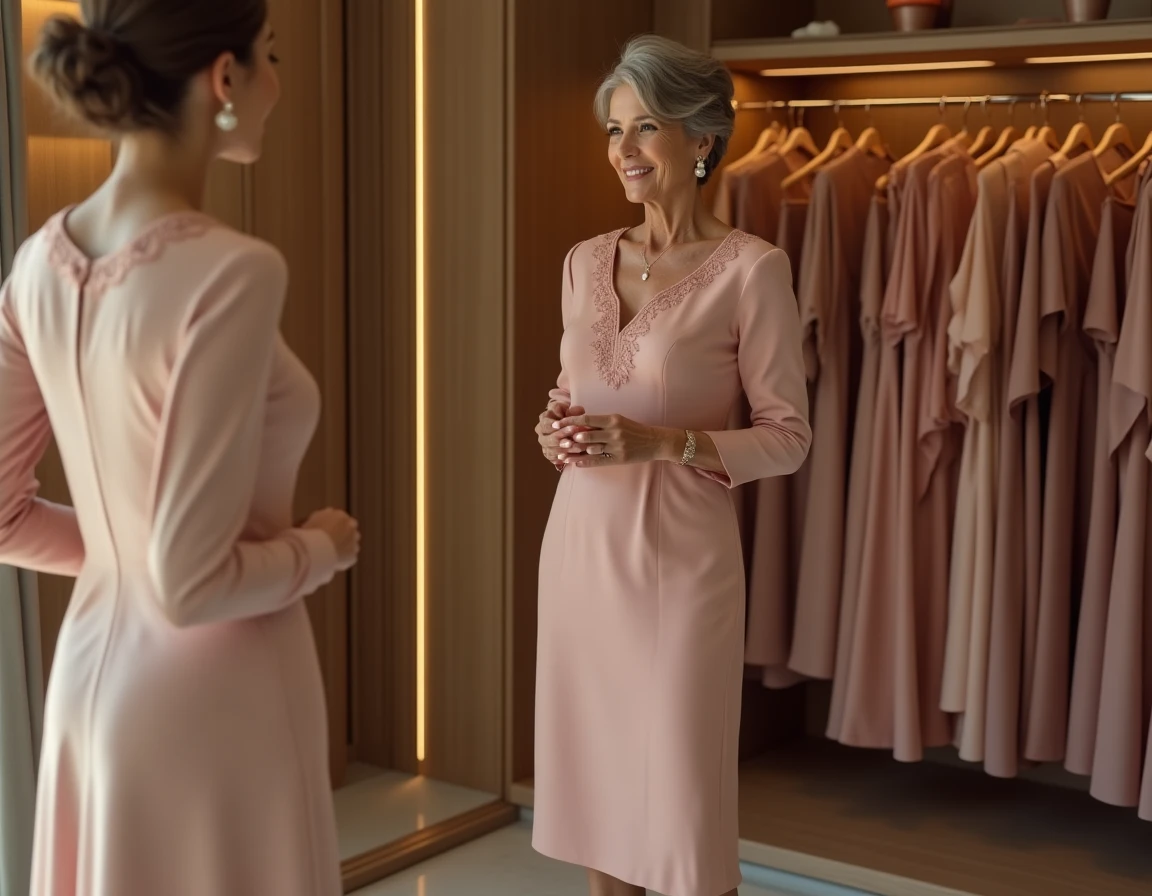
- Mother or mother-in-law of the couple: powdery tones (old rose, grey-blue, champagne) signal a strong presence without competing with the bride. A structured ensemble (short jacket and midi dress) marks status without rigidity.
- Aunt or close godmother: bolder colors (teal, burgundy, sage green) work well, especially if the dress code is festive. The flowing long dress in viscose offers a good compromise between elegance and relaxation.
- Friend or colleague guest: there is more freedom. A well-cut pantsuit in a bold color can replace the dress and provide superior comfort for an entire day.
The common point in these three situations: the outfit must remain cohesive from morning to evening, including in group photos taken at the end of the day, when fatigue is visible in the postures.
Wedding accessories and shoes: balancing style and endurance
Accessories often concentrate judgment errors. A statement piece worn for eight hours can tire the neck. High-heeled pumps held for twenty minutes in the store become painful after four hours standing on gravel or grass.
For shoes, the question is not “heel or no heel” but “how long will I be walking and on what surface.” A block heel of four to five centimeters holds up better over distance than a thin heel, and models with a back strap prevent foot slippage by the end of the evening.
- Plan for a compact spare pair (foldable flats, flat sandals) in a bag left at the table, if the venue allows.
- Favor lightweight but visible jewelry: dangling earrings rather than a heavy necklace, a thin bracelet rather than a cuff.
- The classic minaudière evening bag forces everything to be left on the table. A clutch with a removable shoulder strap frees the hands for the cocktail.
The all-day test
Before the big day, wearing the entire outfit (dress, shoes, jewelry, bag) for two hours at home helps identify friction points. Sitting, standing up, raising arms, walking on different surfaces. This simple test avoids most unpleasant surprises on the wedding day.
The ideal outfit for a wedding at 60 is not the one that impresses in the fitting room mirror. It is the one that keeps its promises at 11 PM, when the party is still in full swing and the shoes are still on.