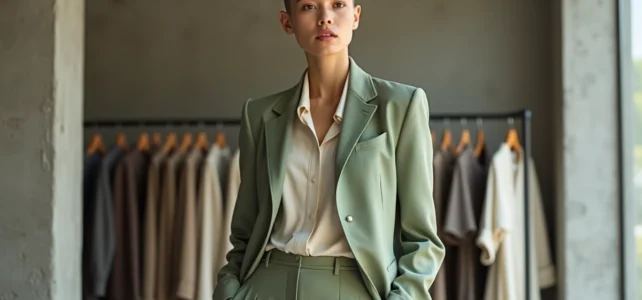
The gender fluid fashion refers to a clothing approach that refuses to categorize garments into “men” or “women.” For several seasons, this trend has moved beyond the luxury designer circle to reach mainstream brands, online sales platforms, and even the navigation tools of e-commerce sites. Measuring this evolution requires looking at where brands, distributors, and consumers stand in the concrete abandonment of gendered wardrobes.
Luxury Brands and Mainstream Retailers: Two Speeds of Transition to Genderless
The gender fluid movement in fashion has long been associated with haute couture shows. Rad Hourani launched the first collection labeled “Unisex Couture,” Alessandro Michele presented a mixed collection at Gucci, and Jean Paul Gaultier already offered Gaultier 2 as a gender-neutral line. These initiatives remained confined to an informed audience.
Since 2022-2023, the situation has changed on the distribution side. H&M and Zara have introduced gender-neutral capsule collections that go beyond just an oversized sweatshirt available in mixed sizes. These lines incorporate cut adjustments designed for a plurality of bodies (shoulders, hips, stature), according to Business of Fashion.
| Approach | Examples | Level of Morphological Customization |
|---|---|---|
| Luxury / Designers | Rad Hourani, Gucci (Alessandro Michele), Ludovic de Saint Sernin | Redesigned cuts, but limited distribution |
| Fast Fashion Brands | H&M, Zara (capsule collections) | Integrated shoulder/hip/stature adjustments |
| Online Platforms | Zalando, Amazon Fashion | “Genderless” filters by cut, material, style |
| Independent Brands | 69, One DNA, Cilium | Entirely gender-neutral catalogs from the start |
This table highlights a often overlooked point: gender fluid fashion progresses more through distribution than through creation. The “no gender” navigation filters offered by Zalando and Amazon Fashion allow sorting clothes by cut or material rather than by men/women categories, making the approach accessible to a much broader audience than that of Fashion Weeks.
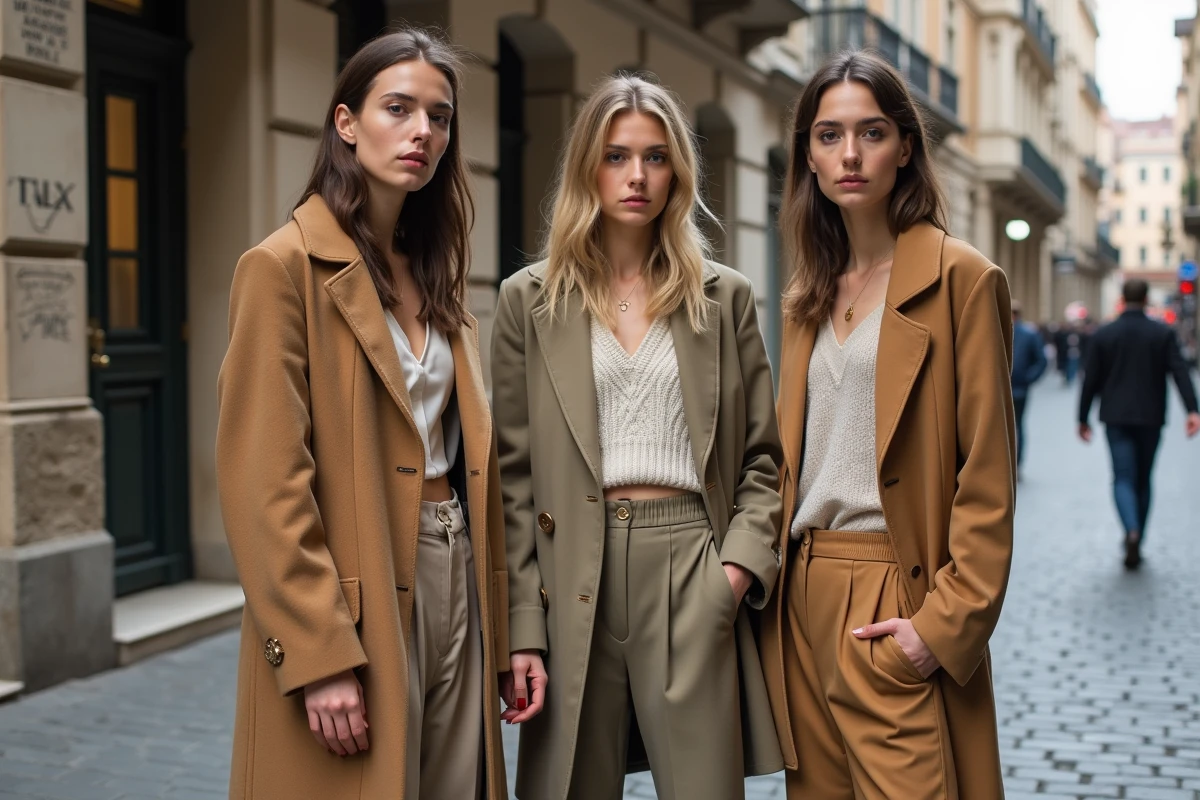
To delve into the iconic pieces of this trend and concrete style references, the article from Recommandons on fashion details the most worn gender fluid garments and ways to integrate them into a daily wardrobe.
Cut and Morphology: What Changes When a Garment Is No Longer Gendered
A t-shirt labeled “unisex” in the 2010s was often a men’s model offered in small sizes. The result did not suit narrow shoulders or wide hips. The current generation of gender fluid collections corrects this flaw by starting from a neutral pattern reworked on several sizes.
The adjustments focus on three main axes:
- The shoulder width, designed not to fall on certain body types while remaining loose on others, thanks to lower armholes and raglan seams.
- The hips and waist, where straight cuts replace gendered tailoring without producing a baggy effect.
- The stature, with bust and inseam lengths offered in several variations independent of the men/women category.
This technical approach explains why recent capsule collections stand out from the simple “oversized unisex” of a few years ago. Current gender fluid clothing seeks to dress different bodies, not to erase differences under a uniform volume.
Advertising Regulation and Gender Stereotypes in France
The evolution of gender fluid fashion is not only taking place in workshops. The framework within which brands communicate about their collections has also shifted. In France, the ARPP updated its recommendation “Image and Respect for the Person” in 2022 by explicitly incorporating the issue of gender stereotypes in clothing advertising.
This update invites brands to avoid fixed representations of masculinity and femininity. Specifically, a campaign that would systematically associate dresses with women and suits with men could be flagged. For brands launching gender-neutral lines, this regulatory framework offers support: their communication can promote fluidity without risking being perceived as provocative.
However, this recommendation remains advisory. It does not constitute a legal obligation, and its application depends on the self-regulation of the sector. Brands that still segment their catalogs by gender are not in violation, but they are gradually distancing themselves from the directions of the French advertising regulator.
Navigating a Gender Fluid Wardrobe: Concrete Style References
Highly Versatile Pieces
The straight blazer with natural shoulders, mid-rise straight-cut trousers, and the trench coat without marked tailoring are the most commonly worn staples in current gender-neutral collections. These pieces work on a majority of silhouettes because they rely on simple geometric lines.
Colors and Materials
The first unisex collections relied almost exclusively on black, white, and gray. Recent lines expand the palette. Bright colors or graphic patterns now appear in gender fluid capsules, including among mainstream brands.
The choice of material is as important as the cut. Fabrics with a fluid drape (viscose, lyocell) allow the garment to adapt to the body shape rather than constrain it. In contrast, rigid fabrics impose a structure that can reproduce gendered codes even on a so-called neutral pattern.

Gender fluid fashion has moved beyond the stage of creative intent declaration. The morphological adjustments in collections, navigation filters on major platforms, and the updating of the French advertising framework outline a movement that is structured as much by technique and distribution as by aesthetics. Gender boundary-less clothing is no longer a runway concept; it is a developing market segment.