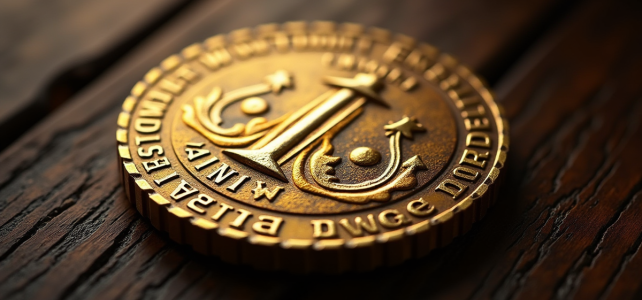
A jewel with multiple facets, the precious medal stands out as a fascinating witness to our cultural and artistic heritage. Sometimes a fashion accessory, sometimes an object of piety, it adorns necks and serves as a reflection of a personality or belief. Its stylistic diversity and rich history make it an essential element in the world of jewelry. The timeless charm it exudes makes it a choice gift, a centerpiece for any collection.
The origins of the precious medal
The precious medal finds its roots in Antiquity, where it was already valued for its ornamental and symbolic virtues. Let’s revisit the origins of this fascinating object.
Read also : Gender Fluid Fashion: Understanding the Trend and Embracing a Boundaryless Style
Initially worn by the Egyptians, it was often dedicated to deities and made of solid gold. In Rome, soldiers received medals for their bravery, thus blending honor with art. In the Middle Ages, it became a symbol of piety and protection. Medallions were blessed by the Church and worn as talismans.
Over time, the precious medal evolved to become a fashion accessory. The royal courts of Europe adored them, and artisans competed in ingenuity to create unique and sumptuous pieces.
Related reading : Guillaume Faury and his wife: truths, confessions, and the end of rumors
Materials and manufacturing techniques
Each precious medal is the result of meticulous work and exceptional artisanal know-how. Let’s discover the materials and techniques that make these jewels exceptional pieces.
- Materials: Gold, silver, and platinum are the most commonly used materials for their durability and brilliance. Precious stones such as diamonds, sapphires, and emeralds add a touch of exclusivity.
- Techniques: Engraving, enameling, and setting are common processes. Engraving allows for personalizing the medal with patterns or initials. Enameling adds color and texture, while setting highlights the precious stones.
- Innovation: New technologies, such as 3D printing, allow artisans to push the boundaries of creation with ever bolder designs.
Symbolism and meaning
The precious medal is not limited to aesthetics; it conveys strong and intimate messages for the wearer. Let’s analyze the different symbolisms associated with this object.
- Religious: For many, it is a symbol of faith and devotion. Religious medals like those of the Virgin Mary or Saint Christopher are very popular.
- Personal: They are often engraved with dates or initials, making each piece unique and carrying precious memories.
- Commemorative: Medals are often given to celebrate significant events such as baptisms, weddings, or anniversaries.
- Identitary: They can also represent belonging to a group or club, symbolizing identity and camaraderie.
The precious medal today
In our contemporary society, the precious medal continues to captivate with its beauty and symbolism. Let’s observe its current role in the world of jewelry.
It has managed to reinvent itself and adapt to modern trends. Jewelry creators play with shapes and colors to offer innovative and bold collections. Personalization remains a major asset, allowing customers to create custom pieces.
Many jewelry items are now designed with an ethical approach, favoring recycled materials or those from fair trade. This trend responds to a growing demand for objects that respect the environment and workers’ rights.