
When planning a trip from Paris to Barcelona, the instinct is often to look for a low-cost flight. The ticket appears at a modest price, but between the transfer to the airport, security checks, waiting at the boarding gate, and the journey to the city center upon arrival, the actual time from door to door often exceeds that of the direct train.
This practical observation, documented by the European Travel Trend Report 2026 from the DERTOUR group, is leading more and more European travelers to reconsider their travel habits.
Train vs. Plane on European Routes: The Real Time Calculation
For journeys of less than six hours by train, the comparison with flying often favors rail once all the side factors are taken into account. No security checks, no restrictive baggage allowance, a departure from the city center, and an arrival in the city center.
There’s also an increase in work comfort. A table, an electrical outlet, mobile network coverage for a good part of the journey. For those traveling with equipment (folding bikes, instruments, photography gear), the absence of extra fees for bulky luggage changes the game.
Shared stories on 1monde.net confirm this gradual shift: travelers recount how a simple change in mode of transport has altered their perception of the journey, transforming it from a constraint to the first step of the trip.
Slow Travel and Long Stays: Slowing Down by Choice, Not by Ideology
Slow travel is often presented from an ecological perspective. The on-the-ground reality is more prosaic. According to Hilton’s Travel Trends Report 2025, cited by CNN Brasil, travelers extending their stays are primarily looking to reduce stress and simplify their logistics.
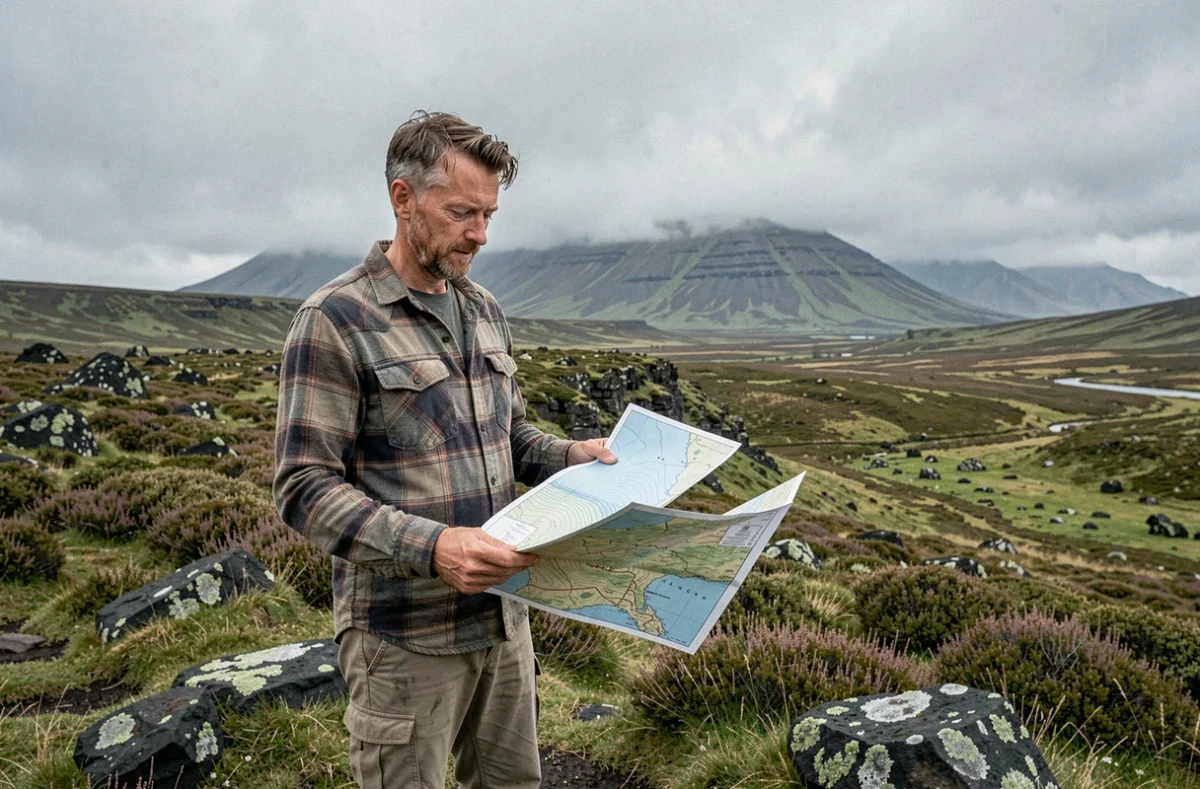
Fewer changes in accommodation mean fewer bags to pack and unpack, fewer intermediate trips, and fewer reservations to manage. When spending a week in one place instead of three nights in three different cities, you sleep better, eat better, and often spend less.
This mode of travel works particularly well in a van or for long-term rentals. In France, regions like Ardèche or the Basque Country lend themselves to stays of one to two weeks without fatigue, provided you accept not to check off everything on a list of sites to see.
What Slow Travel Changes in Organization
- You book a single accommodation instead of four or five, which reduces the time spent on booking platforms and the risks of cascading cancellations
- The food budget decreases because you discover local markets, grocery stores, and good restaurants over the days, instead of eating randomly at each stop
- Free days without a schedule allow you to discover places that guides don’t mention, often recommended by locals met on-site
Greenwashing in Tourism: How to Spot Fake Labels
Traveling differently also means knowing whom to trust. Many accommodations display vague ecological commitments: “eco-responsible,” “committed to the planet,” “green tourism.” Without third-party certification, these mentions do not commit to anything verifiable.
An analysis published by i-Dest in September 2026 describes how frameworks like the Good Travel Seal or Green Destinations attempt to structure this verification. The principle: an external audit evaluates actual practices (water management, waste treatment, impact on local biodiversity) instead of relying on the owner’s statements.
In practice, when looking for a gîte or campsite for a stay in France, checking for the presence of an audited label takes just a few minutes. Feedback varies on the reliability of each label, but the presence of an external audit remains the most reliable criterion for distinguishing a real commitment from a marketing argument.
Concrete Signals to Check Before Booking
- A label displayed with a certification number or a link to the auditing organization, not just a decorative logo
- Specific information about practices: volume of sorted waste, energy source, food sourcing policy
- Traveler reviews mentioning these practices (effective sorting, local products at breakfast, absence of single-use plastics)

Overtourism and Flow Management: What Changes for Travelers
Traveling differently also means accepting that certain destinations become saturated at certain times. The usual reflex is to blame the tourists themselves, but data-driven flow management is gradually replacing simple awareness. According to i-Dest, destinations are now using real-time attendance tracking tools to guide visitors towards less crowded areas.
For us travelers, this translates into local apps that indicate off-peak hours of a site, mandatory reservation systems on certain trails or beaches, and sometimes differentiated pricing based on the season.
In practice, visiting Dubrovnik in November or the Calanques of Marseille on a Tuesday morning in October is not a sacrifice. You enjoy the place more, often pay less, and help distribute the pressure on fragile territories.
Traveling differently is not just a manifesto. It’s a series of practical choices, from the mode of transport to the calendar, including the duration of the stay and the verification of labels. Each decision made in advance alters the experience on-site, sometimes more radically than a change of destination.