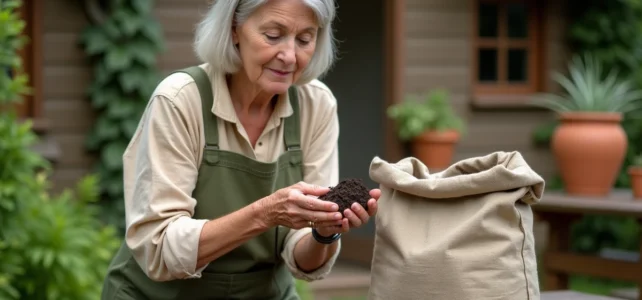
A bag of potting soil opened last spring, tucked behind the garden shed and found in the fall: we’ve all experienced this situation. The reflex would be to dump it directly into the pots, but potting soil that has been exposed to heat or humidity for several months does not behave like fresh substrate at all. Knowing how long to keep potting soil before it loses its properties helps avoid easily preventable planting failures.
Physical degradation or biological degradation of potting soil: two distinct problems
When you open an old bag and find a compact, sticky mass, you immediately think the potting soil is ruined. In reality, it is important to distinguish between two types of degradation that do not necessarily occur together.
You may also like : Practical Guide: How to Easily and Error-Free Open a crdownload File
Physical degradation concerns the structure. The peat and plant fibers that give potting soil its aeration capacity decompose over time. The substrate collapses, retains less air between its particles, and can become hydrophobic on the surface while remaining waterlogged below. You end up with soil that drowns the roots instead of oxygenating them.
Biological degradation, on the other hand, affects microbial life. Potting soil stored for a long time in a closed and warm bag sees its beneficial flora gradually disappear. The microorganisms that help plants absorb nutrients die or enter dormancy. The substrate may look visually acceptable, with a still acceptable texture, but it no longer nourishes anything. To better understand how long to keep potting soil and identify these signs, you need to look beyond appearance.
Read also : How to Watch Buzzmonclick on Replay: Tips, Platforms, and Reliable Alternatives
Potting soil whose structure has broken down but retains biological activity can still serve as a mixing base. Conversely, structured potting soil that is biologically dead behaves like an inert medium, comparable to new coconut fiber without any amendments.
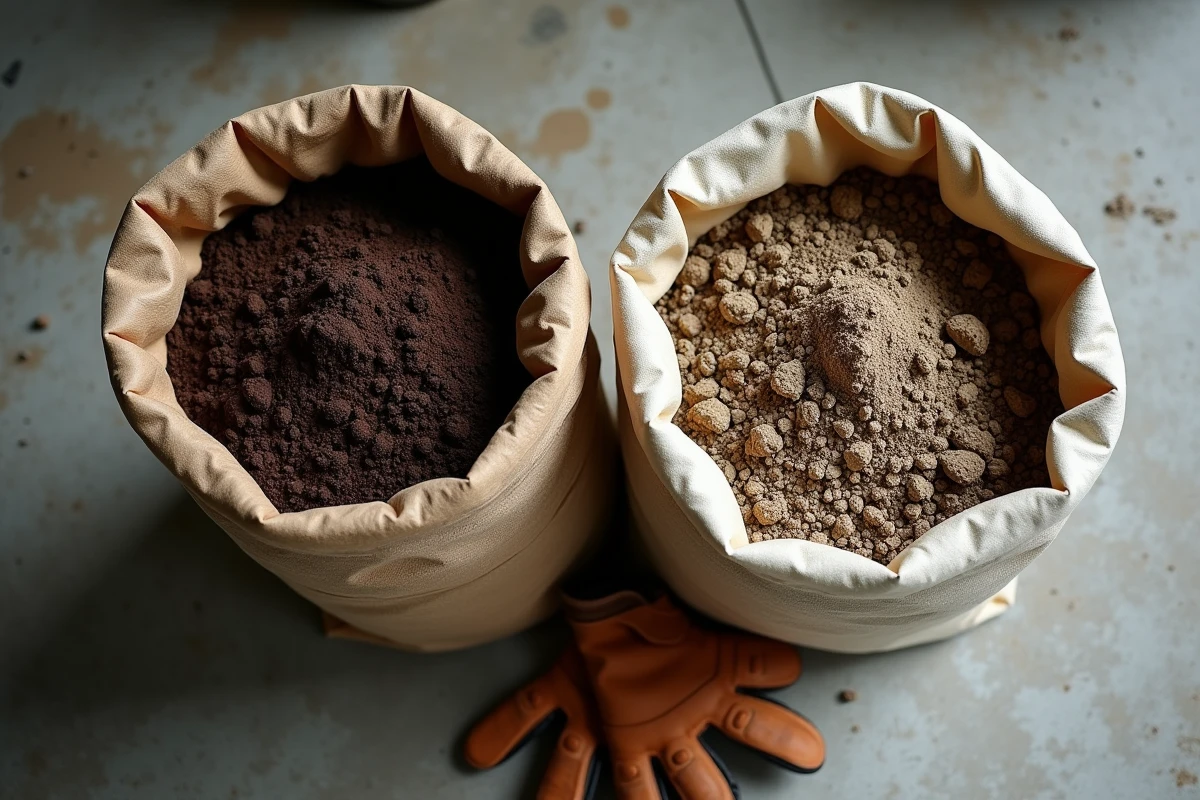
Viability test of potting soil before repotting
No reliable expiration date is found on commercial potting soil bags. The shelf life depends so much on storage conditions (temperature, humidity, sun exposure) that a homemade verification protocol remains the only realistic approach.
Assessing the structure in three steps
- Take a handful of potting soil and squeeze it. If the clump remains compact and does not break apart when you open your hand, the structure is too degraded for use alone in a pot.
- Pour water over a small amount spread out in a saucer. If the water beads on the surface and takes several seconds to penetrate, the substrate has become hydrophobic, indicating that the organic matter has decomposed too much.
- Smell the potting soil. A smell of sulfur or ammonia indicates anaerobic fermentation: the substrate has been stored too wet and too closed. A simple smell of damp earth, on the other hand, is normal.
Testing germination capacity
For gardeners who plan to use old potting soil for seedlings, a quick germination test clears up any doubts. Sow a few radish or cress seeds in the suspect potting soil and in fresh potting soil, under identical conditions. If the germination is comparable after a few days, the substrate remains usable for less demanding seedlings.
This test does not replace visual and olfactory analysis, but it provides a concrete indicator of the residual biological activity of the soil.
Storing potting soil according to its climate: an underestimated variable
It is often said that an unopened bag of potting soil lasts a long time. Feedback on this point varies, and for good reason: a bag stored in a ventilated garage in Brittany does not age at all like the same bag placed in full sun in southern France.
In a humid and cool climate, the main risk is the development of mold and water saturation. Storing bags elevated, in a covered and ventilated place slows this process. In a hot and dry climate, complete dehydration and the collapse of organic structure are the problems. The potting soil turns into fine dust, unusable as is.
In both cases, an opened bag degrades much faster than a closed bag. If you only use part of the bag, close it as tightly as possible and place it in the shade. A simple roll of the top of the bag secured with a clip is enough to limit air and moisture exchange.
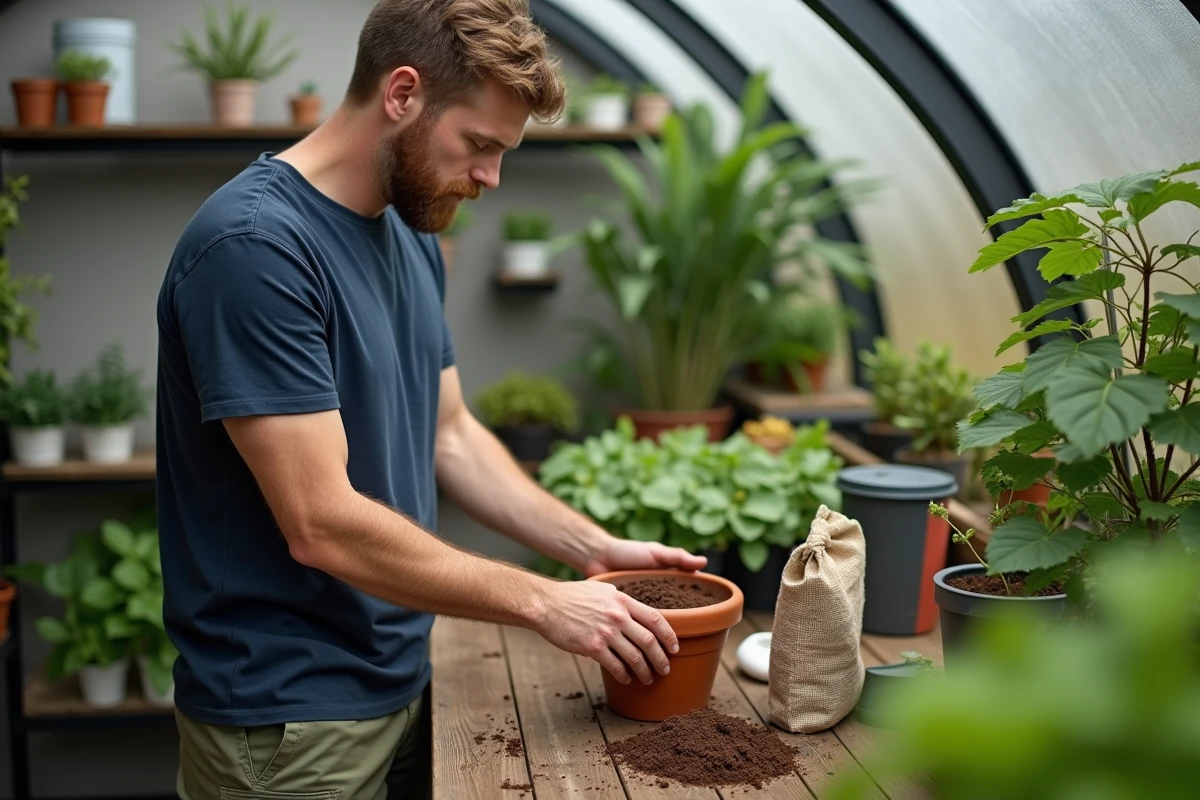
Mixing old potting soil and new potting soil: proportions that work
Throwing away old potting soil whose structure has begun to weaken would be wasteful. The most effective solution is to mix it with fresh substrate and some amendments.
For classic repotting (indoor plants, planters), you can integrate about one-third of old potting soil for two-thirds of new potting soil, provided that the old soil shows no suspicious odor or visible mold. This ratio maintains proper drainage while reducing the volume of substrate to purchase.
For use in the vegetable garden or in open ground, the constraints are less. Incorporating old potting soil into compost accelerates decomposition and adds carbon material. It can also be spread in a thin layer as light mulch around already established plants, where it will gradually reintegrate into the soil.
Some useful additions to revitalize tired potting soil:
- Mature compost, recognizable by its forest floor smell and crumbly texture, brings the missing microbial life.
- Perlite or coarse sand restores drainage if the structure has compacted.
- A slow-release organic fertilizer compensates for nutrient loss, especially nitrogen, which disappears first during prolonged storage.
Potting soil remains a living medium that evolves over time, temperature, and the water it receives. Rather than looking for a universal expiration date, observing its texture, smell, and ability to absorb water provides more reliable answers than any indication on the packaging.