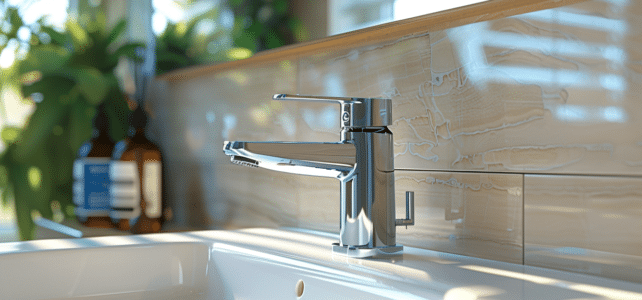
Adjusting the temperature of the water that comes out of your tap is essential to prevent household accidents, especially burns. Children and the elderly are particularly vulnerable to high water temperatures due to their more sensitive skin. Properly adjusting the thermostat of your water heater is a crucial step in maintaining the water at a safe temperature. Devices such as thermostatic mixers can provide additional safety by precisely controlling the water temperature, thereby reducing the risk of burns during the daily use of hot water.
hot water: to the left or to the right
Related reading : How to Optimize Your Driving Route with Effective Online Tools
Preventing burn risks: finding the right temperature balance
In the vast structure of home safety, adjusting the water temperature stands as a central pillar. Professionals and knowledgeable users understand that the water heater must be set accurately to effectively prevent burn risks. The optimal temperature, recommended by experts, ranges between 60° and 65° Celsius. At this level, the water is hot enough to eliminate the risks of bacterial proliferation without becoming a danger to the delicate skin of users.
A pressing question arises: hot water: to the left or to the right? This dilemma, though trivial at first glance, echoes a more complex reality. It underscores the necessity of clearly marking the distinction between cold and hot water on drinking water distribution devices to avoid any confusion that could lead to accidents.
Further reading : How to recover your Disons demain account?
Adjusting the temperature of the water heater is also a lever for energy savings. An excessively high temperature leads to unnecessary energy consumption. Adjusting the temperature to an optimal threshold helps reduce the energy bill, thereby contributing to a more ecological and economical management of resources.
Beyond economic considerations, the prevention of legionellosis is among the major health concerns. This disease, which develops in stagnant water at temperatures below 60°, highlights the importance of precise and responsible adjustment. The right temperature balance ensures the safety of the water while protecting its users from burn risks, making temperature adjustment both a preventive and health-promoting procedure.
Detailed steps to adjust the temperature of your tap
Identifying the control device, the thermostat, is the first step towards properly adjusting the water temperature. This component, often located close to the water heater, is the instrument through which the water temperature is finely tuned. It is necessary to locate this thermostat to make any adjustments, often represented by a dial or a digital control panel, depending on the latest models.
The second step involves making the temperature adjustment. Gently turn the dial or use the buttons on the control panel to set the temperature between 60° and 65° Celsius, a range recognized for its dual function: effectively preventing legionellosis and avoiding burn risks. This operation requires precision and attention, as even a slight deviation can have significant repercussions on health and energy consumption.
Confirm the adjustment and test its accuracy. Let the water run for a few minutes and measure its temperature using an appropriate thermometer. This verification is essential to ensure that the adjustment made on the thermostat is accurately reflected in the tap water temperature. If the temperature is not compliant, readjust the thermostat until the desired balance is achieved. This process, although sometimes tedious, is a guarantee of safety and control over the drinking water distribution in accordance with health needs and requirements.