
Technological evolution is revolutionizing the healthcare landscape. Modern medical facilities now integrate cutting-edge services and features to enhance the patient experience and optimize care processes. From electronic health records to mobile tracking apps, patients benefit from instant access to their medical information. Healthcare staff utilize advanced diagnostic tools and surgical robots for more precise and less invasive interventions. Artificial intelligence and telemedicine open new avenues for remote consultations, thereby reducing wait times and costs while maintaining a high level of care.
Emerging Technologies Revolutionizing Healthcare
In an unceasing quest for excellence, the medical center is transforming under the influence of emerging technologies. Digital innovation in healthcare is no longer an option but a necessity to tackle the complex challenges of a constantly evolving sector. 3D medical printing, for example, is now used to reproduce three-dimensional models of problematic areas of the body, allowing for enhanced visualization and understanding of pathologies for healthcare professionals. This technology promotes a personalized and precise approach to medicine.
You may also like : The Precious Medal: A Symbol of Elegance and History
3D digital twins stand as true revolutions: they allow for the visualization and prediction of treatment effects on patients, paving the way for anticipatory and individualized care. At the intersection of medical imaging and virtual reality, projects like the Living Heart Project encompass the fields of pharmacy, biotechnology, medical devices, and patient care, to model the human heart and its pathologies in three dimensions.
Big Data in healthcare plays a crucial role in analyzing and examining large amounts of medical data, facilitating informed and rapid decision-making. Artificial intelligence, in turn, proves indispensable in the diagnosis and management of medical data, transforming the clinical approach through finer predictions and algorithmic decision support. Nanotechnology fits into this trend, with its potential for targeted diagnosis and treatment of diseases, promising a revolution in therapy delivery and health outcomes.
Further reading : The impact of innovative learning platforms in the current education system
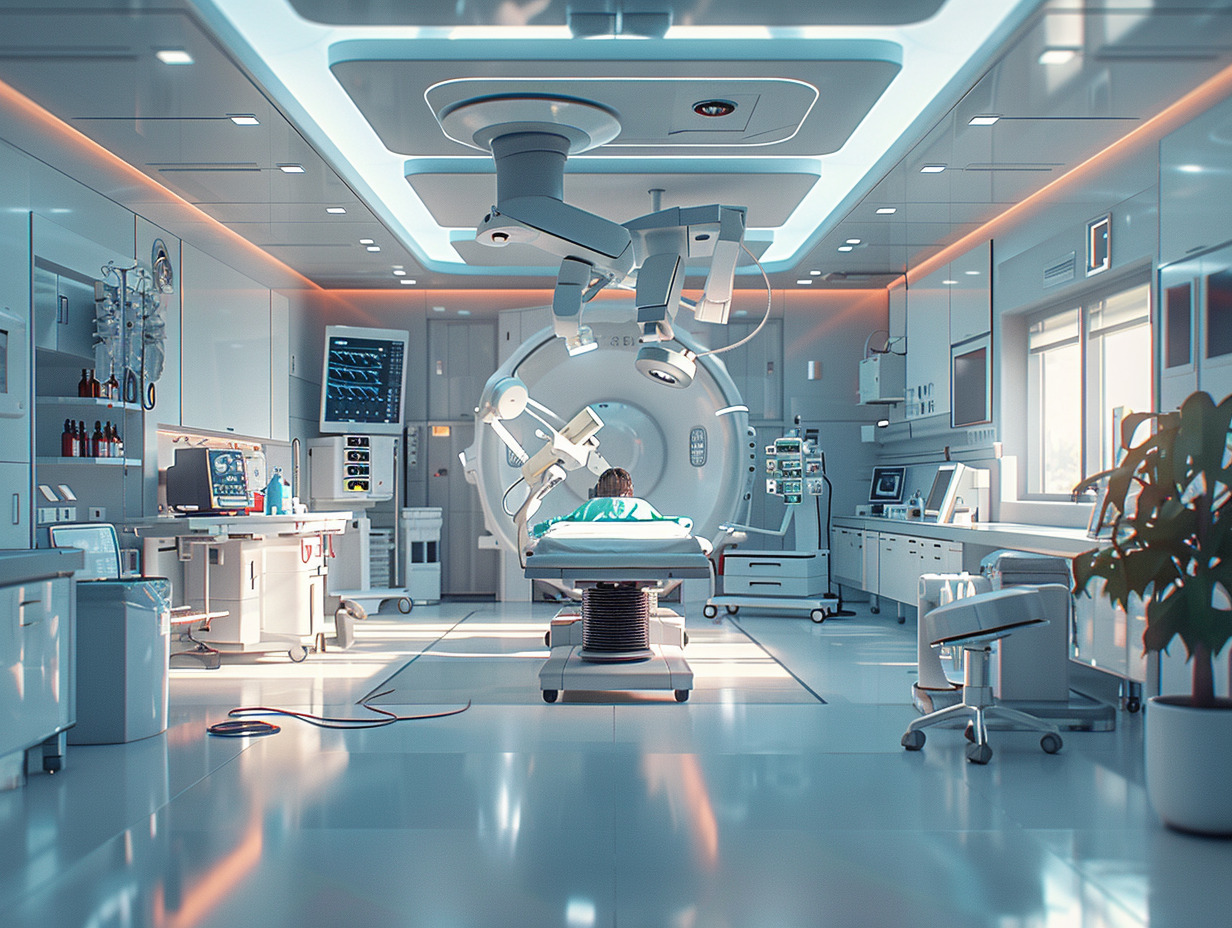
The Role of Digital Innovations in Enhancing the Patient Experience
The patient experience is at the heart of the evolution of healthcare, elevated by digital innovations that outline the contours of a future already within reach. Mobile health applications provide patients with greater autonomy in managing their well-being, with features ranging from vital sign tracking to scheduling medical appointments. Telemedicine, with its remote monitoring technology, enables unprecedented continuity of care, thus reducing geographical and temporal barriers to accessing medical advice.
Institutions such as the Institut Pasteur and the Institut Curie play a catalytic role in integrating these advancements, actively participating in research that leads to concrete solutions such as the technology developed by the start-up Avatar Medical. The latter, through virtual reality, facilitates surgical interventions by allowing doctors to preview procedures in a three-dimensional environment, thereby enhancing the safety and effectiveness of the care provided.
The Living Heart Project, developed by Dassault Systèmes, is a striking example of how digital simulation can transform the patient experience. By modeling the heart in 3D, this project helps healthcare professionals better understand heart failure, a disease that, according to the World Health Organization, is responsible for millions of deaths each year. Technology serves life by enabling a more personalized and preventive approach to medicine.
Big Data in healthcare emerges as a significant ally, providing objective and comprehensive data on a large scale. Once analyzed, this data allows for the detection of trends, optimization of care pathways, and ultimately, significantly improving the quality of the patient experience. Precision medicine is anchored in this digital reality, where each patient becomes the heart of a tailored and predictive care ecosystem, marking the advent of a new era in the history of health.