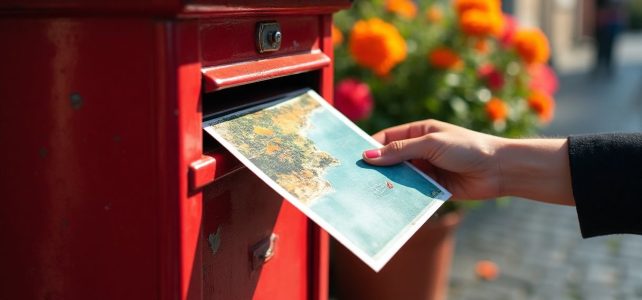
Sending a card by postal or digital means is not just a simple gesture, it is an authentic way to connect. In an era where digital communication prevails and every interaction seems fleeting, the card to send stands out for its ability to transcend time and space. This small piece of paper, often adorned with delicate illustrations and carefully chosen words, carries an undeniable charm. But why do we continue to send these cards in a world governed by instant emails and text messages?
The historical roots of the card to send
A look back is necessary to understand the evolution of this fascinating medium of communication.
The earliest traces of postcards date back to Antiquity. Ancient civilizations used engraved clay tablets to convey messages. Although rudimentary, these early forms of communication foreshadowed the future of the postcard. With the advancements of civilization, paper emerged, transforming the way messages were exchanged.
In the 19th century, the postcard as we know it today was born in Europe. It became a popular phenomenon thanks to the rise of postal services. Travelers and soldiers made extensive use of it to stay in touch with their loved ones. The 20th century saw the expansion of themed cards, illustrating picturesque landscapes, historical events, or works of art. These cards provided a glimpse of the world to the recipients, adding an educational dimension to their primary function.
The card to send in the digital age
In our digital era, the traditional card has not been eclipsed but transformed, bringing a new dynamic to communication.
- Electronic cards or e-cards have emerged, allowing for instant wishes to be sent across the globe with just a click. They offer unprecedented flexibility, with interactive and animated designs that captivate the eye.
- The ability to customize each electronic card ensures they remain as unique as their paper counterparts.
- Specialized platforms offer a wide range of templates for every occasion, making it easier for users to choose. Thus, a card to send becomes an easy and quick way to express feelings.
The online card represents an ideal fusion of the tradition of written art and technological innovation, never losing its personal and sentimental essence.
The emotional impact of cards on human relationships
Cards play a significant role in strengthening interpersonal relationships, whether they are friendly, familial, or professional.
Receiving a card, whether physical or digital, provides a feeling of connection and closeness. Despite geographical distance, this gesture materializes the affection and attention given to the other. The choice of words, the image on the card, everything is carefully selected to resonate with the recipient.
- Cards allow for the sharing of personal messages, gratitude, or encouragement. They capture unique moments and precious memories.
- Special occasions, such as birthdays or year-end celebrations, become moments of celebration and sharing thanks to the exchange of cards.
- In the face of life’s challenges, giving a card can be a source of invaluable comfort and support. It demonstrates presence and empathy, even from a distance.
- In the professional world, sending cards strengthens business relationships, showing appreciation and mutual respect between colleagues or partners.